
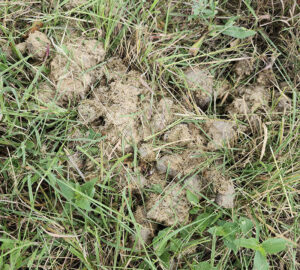
 July 1, 2026–I am a connoisseur of manure.
As a farm boy, I was knee deep in it. I can discuss the merits and shortcomings of each variety. The globular tackiness of horse manure. The iconic patty shape of cow. The lumpy dustiness of chicken and turkey. The tiny discrete spheres that cascade behind deer, rabbit, and sheep.
Anyone who has grown up on a farm or ranch understands the complex love/hate relationship that blossoms with the by-product of raising livestock. Fathers were canny in how they nurtured that relationship.
For farm kids, one of our first flights of freedom was when dad trusted you to fire up and drive the old John Deere. Those green giants were killing machines, but we loved ‘em. Live spark plugs projected from each side. An external flywheel that often had to be manually turned to start it up, and fuel petcocks that were opened to relieve cylinder pressure by spraying raw fuel in your face. Once the engine turned over, spumes of foul black smoke poured from the often rusty and cracked smoke stack/muffler, giving John Deeres the nickname of “Johnny Popper.”
The only thing more dangerous than starting it was actually operating it. Once you ground it into gear, you were basically a 90-pound child directing a two-ton green monster. Four-foot diameter tires with no fenders churned on each side as you bounced up and down on your metal, uncushioned, unbelted seat. The uncovered fluted power takeoff gear spun merrily behind, eager to catch your trouser cuff or little finger. (I’ll never forget the impression it made visiting the neighboring farmer who wore a pinned up shirt sleeve.)
You steered with a wooden knob and without power steering. Stopping was a matter of crushing a clutch and literally standing on worn brake pedals.
But as boys, we ached to drive it. Dad allowed us, with one devilish trick. In order to drive, we had to clean out the horse stalls. Every loaded manure spreader–another diabolical instrument of torture, with chain-driven track methodically pushing piles of poo back into two rotating rows of metal teeth that flung it into the air–earned you one trip around the pasture. It worked out to roughly one hour behind a pitchfork in exchange for eight minutes behind the wheel.
But there was one variety of dung that defeated me. I was a strapping lad of 16, when Herb Nichols hired me to clean out his hog barn. It was an imposing structure about 200 by 75, with farrowing pens along each wall and an alley down the middle. My mom dropped me off, armed only with four-buckle overshoes, a scoop shovel, and the naivety of youth.
I began shifting that mountain of manure. Alas, it was a Sisyphean task. I faced a river of sludge. Those who know, know that hog manure is the foulest substance on the planet. The stench is indescribable. The consistency is changeling slime.
I scraped and scooped and shoveled that ocean of goop, but for every shovelful I removed, two more flowed in to replace it. It was a chocolate T-1000, the relentless antagonist from Terminator 2. No matter how I attacked it, it reformed and pursued me.
After three hours of scooping, I had cleared no more than a few feet of concrete floor.
I did what any well-adjusted teenager would do. I gave up.
When my mom returned at noon with fried chicken and rolls, she found me sitting on the stoop, utterly defeated. She immediately drove home and brought back my brother. Together, fortified with mom’s fried chicken, we managed to conquer that shed by the end of a very long day.
That experience taught me two important life lessons:
1) No matter how daunting the task, you conquer it by taking small steps and just keep shoveling.
2) I was going to get an education that allowed me to work indoors, with air conditioning and coffee breaks, where shoveling manure was only a metaphor. As in writing this column.